
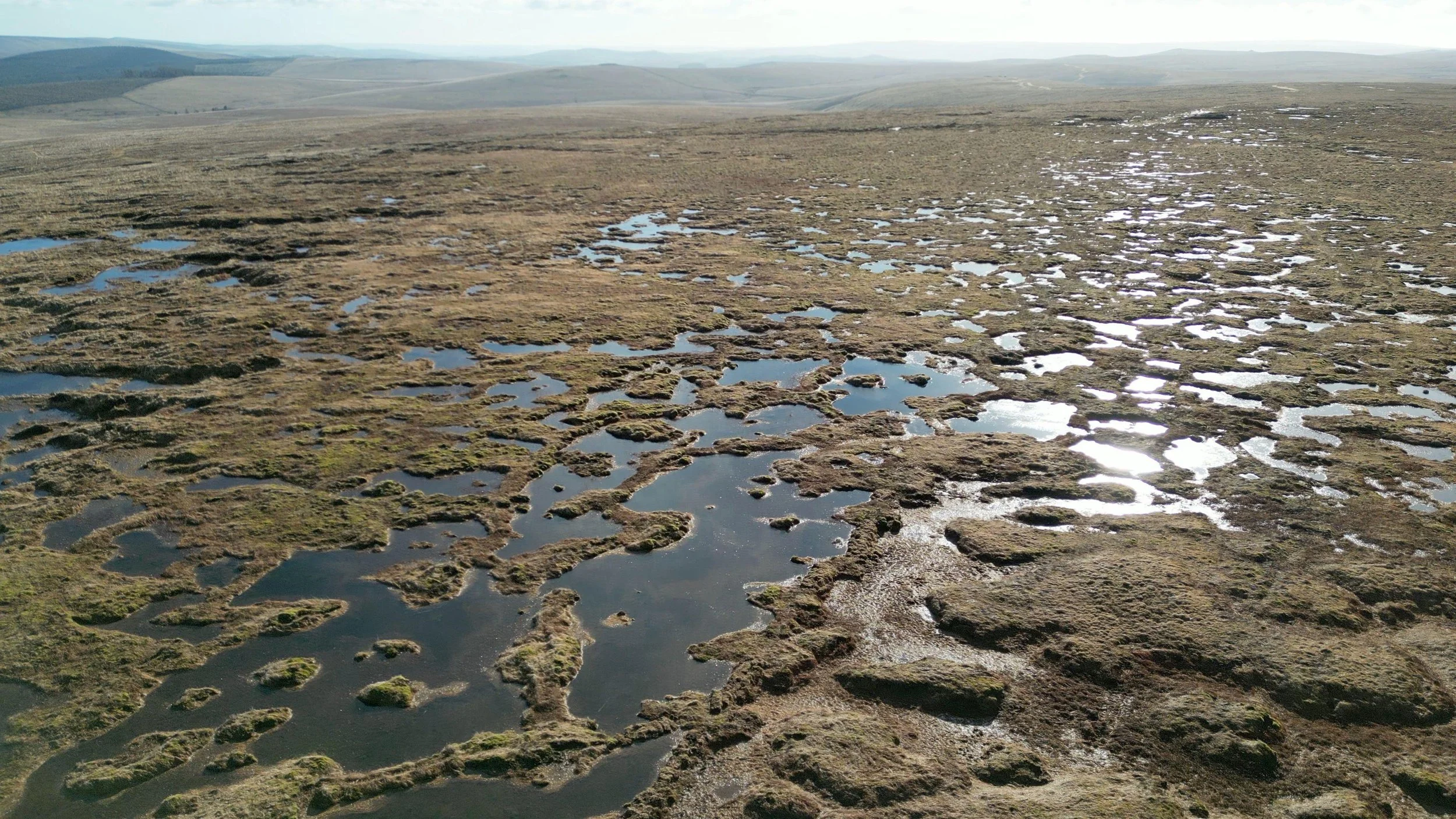
Source: Fatemeh Khosravi, Angela Afua Assan, Jack Clough and Richard Lindsay, International Journal of Agricultural Sustainability, published online 6 October 2026 — Scaling paludiculture: stakeholder perspectives on adoption and enabling conditions in England
What if farming on peatland did not have to mean draining it? A new study by researchers at the University of East London examines the prospects for paludiculture — growing crops suited to wet or rewetted peat soils — in England. The research draws on 36 photo-led interviews with farmers, land managers, conservation organisations, researchers and policymakers.
There was broad recognition of the potential benefits: reducing carbon loss from drained peat, improving habitats and helping regulate water. But the interviews also expose the practical difficulties. Markets for wetland crops remain underdeveloped, regulations can be complicated, and existing funding is often short-term or designed to pay for rewetting rather than for productive wet farming. Seventy-two per cent of participants considered current funding insufficient.
The study is useful because it looks beyond the ecological case and asks what would make a change workable for the people managing the land. Peat restoration cannot be separated from livelihoods, infrastructure, local knowledge and food production. The challenge is not just to invent a different farming system, but to create the conditions in which farmers can realistically choose it.