
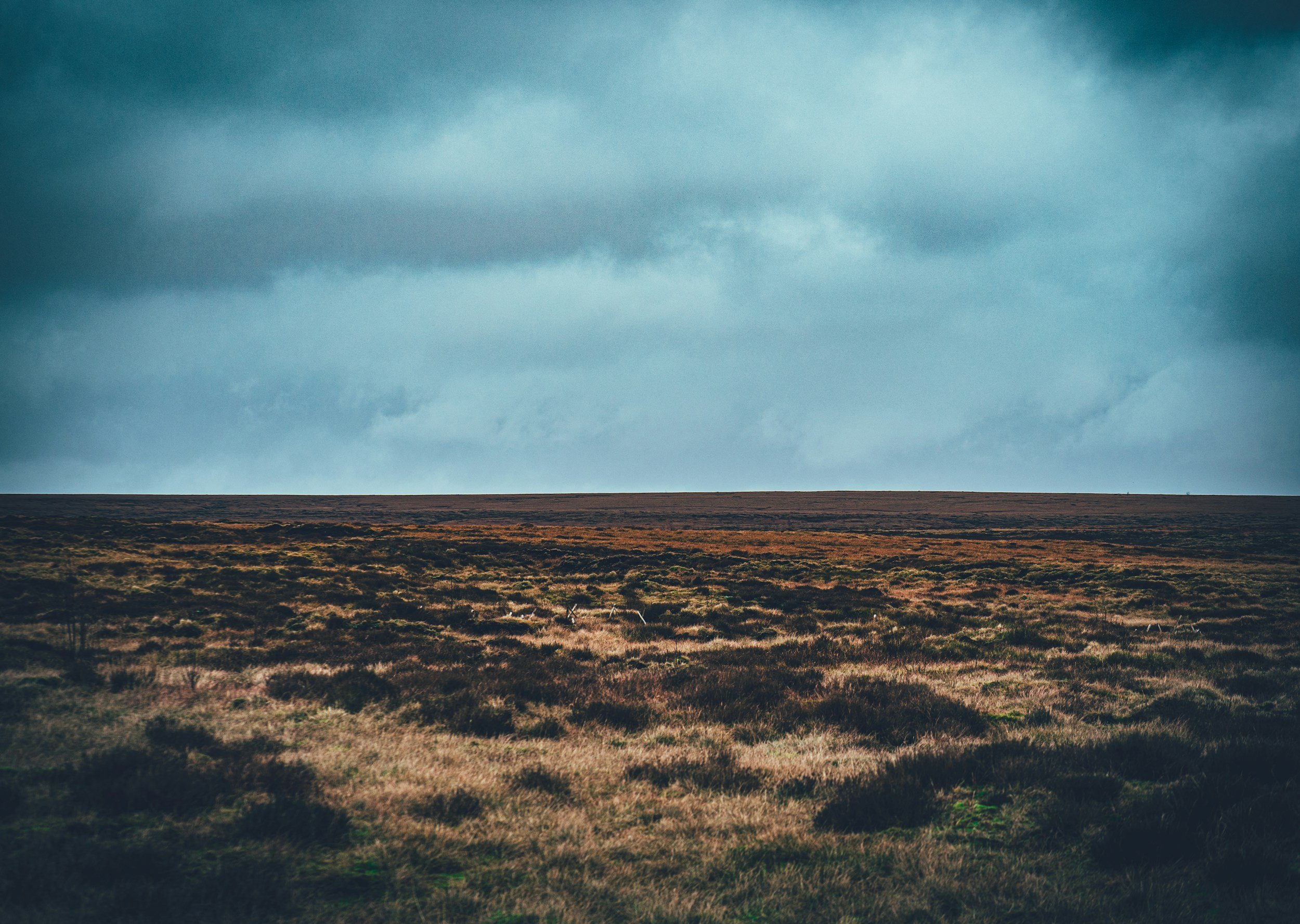
THE PLACES WE BECOME
Stories of kinship, technology and the living Land
What might the future look like if we stopped asking how to save the planet and started asking how to live with it?
The Places We Become is a collection of solarpunk stories about people making lives in landscapes no longer treated as resources or scenery, but as living communities of which we are part.
These are stories about rivers becoming neighbours, towns learning the rhythms of their watersheds, abandoned infrastructure finding new purposes, and communities discovering that resilience comes not from self-sufficiency but from deeper interdependence.
Technology is woven throughout these futures: sensors listening to wetlands, networks sharing knowledge between villages, AI helping communities understand changing rivers and soils, and fabrication technologies working with local materials.
But technology is never simply the answer.
The question is:
What kind of relationship does this technology create?
An AI might reveal patterns in a landscape while raising the question of whether recognising a relationship is the same as having one. A network might connect distant communities while leaving neighbours strangers. Digital systems might preserve ecological knowledge — or reduce a living place to data.
Across the collection, communities encounter particular places and find their own ways of responding. Floodplains are lived with rather than conquered. Degraded land is restored alongside forgotten knowledge. Old crafts return because the relationships embedded within them prove more valuable than the objects they produce.
Children discover where the rain from their roofs eventually goes. Communities learn that repairing a landscape also means repairing relationships between people.
Underlying these stories is a deeper question:
What does it mean to be kin?
Not simply kin to other humans, but to rivers, soils, trees, animals, weather, materials and the places through which our lives are made.
Kinship here is not sentiment. It is practice: paying attention, knowing where things come from, recognising what sustains us, accepting obligations, repairing damage, learning from those who came before and leaving something for those who follow.
The collection imagines solarpunk futures without imagining perfect ones. Communities disagree. Technologies fail. Ecological systems remain unpredictable. There is no blueprint.
Instead there are probes: communities sensing what is happening, responding, learning and adapting.
The future emerges through countless acts of place-making, kin-making and care.
Perhaps the most radical possibility is not a world in which humanity has mastered nature, but one in which we remember that we were never outside it.
The Places We Become is about rivers and robots, soil and satellites, gardens and artificial intelligence, old knowledge and new technologies.
Ultimately, it asks:
How might we become good neighbours to the places that make us possible?
The Places We Become is a collection of solarpunk short stories imagining futures in which people rediscover their kinship with the Land, building communities around ecological relationships, shared knowledge and deeper interdependence.
Blending emerging technologies with traditional knowledge, the stories explore how communities adapt, regenerate and find new ways of living alongside the more-than-human world.
Learning to Live with Water — A floodplain community abandons its attempts to control a changing river and discovers new ways of living alongside its seasonal rhythms.
The Land We Inherit — A group of young people takes responsibility for a degraded landscape, discovering that its restoration requires recovering forgotten ecological knowledge and rebuilding relationships with one another.
The Watershed Commons — A village develops an open-source network for sharing ecological knowledge across its watershed, confronting tensions between collective understanding, local ownership and knowledge that should remain private.
What the River Knows — An artificial intelligence trained on generations of ecological observations identifies previously unnoticed patterns in a river system, challenging the community to reconsider the relationship between technological intelligence and ecological understanding.
A River Remembers - A young hydrologist returns to the valley where her grandmother grew up. The river has become one of the UK's most successfully restored watersheds, but the restoration wasn't achieved primarily through technological intervention.
The Last Apprentice - A young woman living in a post-carbon village becomes fascinated by an elderly hedge basket maker near the end of her life, with her craft at the end of its time.
The Things We Don't Know - An ecologist is issued a new AI assistant. Hesitant but intrigued, she begins to understand how it is part of deciding the future of humanity.
The Orchard at the End of the Road - A town struggles to adapt to a world that demands more self-reliance. One by one, they craft a new story, digging up the past and planting for a new future.
Returning Of A Common - A group of people inherit responsibility for an abandoned piece of land on the edge of a town and set about how to collectively share and use the space.
Beyond the City — People leaving increasingly disconnected urban environments establish new settlements where food production, biodiversity, technology and community life become interwoven.
Grounding Governance - After decades of climate disruption, Britain reorganises local government around watersheds rather than administrative boundaries.
Those That Stayed— A community strives to rewild nature and ends up facing harsh lessons and recognising memories that will live on as stories for generations to come.
The Typhoon Struggle — In a small desert village, an archivist comes across a terrifying journal entry that reshapes how they understand the world around them and the future in which humanity flourishes, or at least survives.
An ambient soundtrack for a living landscape
Alongside The Places We Become comes an atmospheric album of lo-fi chill hop, ambient textures and field recordings, designed not simply to accompany the stories, but to create a space in which to enter them.
The music moves slowly between electronic and organic sound: soft beats, warm tape hiss, distant voices, rain, birdsong, running water, wind through trees and the subtle sounds of human making. Found sounds sit alongside synthesised landscapes, blurring the boundary between the technological and the ecological.
Each track evokes a different relationship with place: walking beside a river, working quietly in a community workshop, watching rain move across a town, tending a garden at dusk, travelling through a recovering landscape.
There is no grand cinematic score here. The music is deliberately intimate, repetitive and spacious — something to read alongside, walk to, think with, or simply inhabit.
Like the stories themselves, the album explores the meeting point between old and new, human and more-than-human, analogue and digital.
It is music for a future that doesn't demand constant acceleration. Music for making things. For noticing things. For being somewhere. And perhaps, for a little while, for remembering that we belong here.