
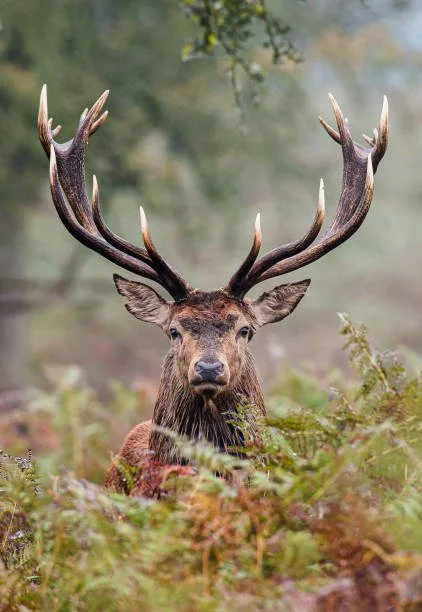
Do deer antlers remember?
Every year, deer shed their antlers and grow an entirely new set. It is an extraordinary example of regeneration: a complex structure of bone, blood vessels, nerves and skin is rebuilt, sometimes growing more than a centimetre a day. But there is a curious observation that makes this process even more remarkable. Apparently, antlers may retain a memory of injuries sustained in previous years.
The phenomenon is known as trophic memory. Researcher George Bubenik and his father, Anthony, observed that when an antler was damaged at a particular point, the following year's growth could produce an additional tine — a branch — at precisely the location of the previous injury. The original antler had been shed, yet its history appeared to influence the shape of its replacement.
Developmental biologist Dr Michael Levin has explored the implications of this observation. How, he asks, can a living system retain information about damage to a structure that no longer exists? Where is that information held, and how does it influence the organisation of new growth months later?
This is a reported phenomenon, not yet a fully established explanation of how biological memory works. The painstaking, multi-year observations are difficult and expensive to replicate. But the question challenges us to think beyond genes as the sole instructions for biological form. Perhaps living tissues have a much more sophisticated capacity to retain and respond to experience than we currently understand.