Diana Scherer
Life and intellectual journey
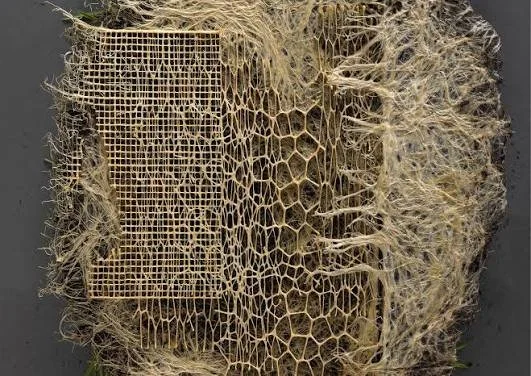
Diana Scherer is a German-born visual artist based in Amsterdam whose work explores the relationships between plants, materiality and human creativity. Trained in visual arts, she has developed an interdisciplinary practice that brings together art, biology, design and botanical research. Her work has increasingly focused on the growth behaviour of plant root systems, particularly their capacity to form complex, branching networks in response to their surroundings. Through collaborations with plant scientists, including researchers at Radboud University in the Netherlands, she has developed techniques for guiding root growth into intricate textile-like structures. Her Interwoven project has attracted international attention for challenging conventional distinctions between natural growth, artistic production and material manufacture.
Key ideas
Scherer's principal contribution is her exploration of plant root systems as active, responsive and materially creative processes. Through Interwoven: Exercises in Root System Domestication (2015–ongoing), she has developed methods of guiding roots into textile-like structures using underground templates, allowing biological growth to become a form of material production. Her work explores the tension between human design and the autonomy of living organisms: although she establishes the conditions for growth, the resulting structures retain an element of unpredictability. She challenges conventional distinctions between manufacturing and cultivation, and between nature as a passive resource and nature as an active participant in making. For ethnoecology, her practice offers an interesting way of thinking about human–plant relationships, material knowledge and the possibilities of working with ecological processes rather than simply extracting materials from them.
Intellectual influences and legacy
Scherer's work sits at the intersection of contemporary art, botanical science, biomaterials research and more-than-human thinking. It responds to established industrial approaches to textiles and manufacturing, in which living materials are generally harvested, processed and shaped to meet predetermined human requirements. Her collaborations with botanists and plant scientists, particularly at Radboud University, have helped translate artistic curiosity into practical experimentation with root growth. Her practice also resonates with wider philosophical discussions about plant intelligence, agency and the boundaries between human and non-human creativity. Rather than presenting plants as possessing human-like intentions, her work invites us to consider their distinctive capacities to sense, respond and organise themselves. Its lasting significance may lie in encouraging a different understanding of creativity and material production: one in which humans become participants in processes whose outcomes they can influence, but never entirely control.