
Story as the soil for leadership and change
I help corporate, climate, non-profit and sports organisations leverage the neuroscience of narrative to shift behaviour. By applying ecosystem thinking to leadership, we transform rigid hierarchies into collaborative, resilient networks.
Complexity as an opportunity for organisational change
I help organisations understand and navigate complexity, uncertainty and change. By applying systems thinking, complexity theory and anthro-complexity to organisational challenges, I help businesses, public bodies and non-profit organisations develop more adaptive, collaborative and resilient ways of working.
Rather than relying on rigid strategies and predetermined solutions, we explore the relationships, interactions and conditions that influence how organisations function, adapt and evolve.
Understanding organisational complexity
Organisations are complex adaptive systems
Organisations are not machines that can simply be redesigned by adjusting their individual components. They are complex adaptive systems, shaped by the interactions between people, relationships, cultures, structures and their wider environments.
Decisions made in one part of an organisation can produce unexpected consequences elsewhere. Informal relationships can be as influential as formal structures, while seemingly small changes can create significant effects across an entire system.
Understanding these dynamics requires us to look beyond organisational charts, established processes and linear approaches to problem-solving.
Systems thinking provides a way of exploring the relationships and interdependencies that shape organisational behaviour. Complexity theory helps us understand emergence, adaptation and the unpredictable consequences of change. Anthro-complexity brings human experience, culture, relationships and sense-making into this understanding.
By recognising organisations as living, evolving systems, we can develop more intelligent approaches to leadership, decision-making and organisational change.
Ecologies of Practice - change to be more product focussed, what can they hire me to do?
Ecologies of organisational practice
Every organisation has its own ecology of relationships, knowledge, behaviours and practices. My work helps organisations investigate these dynamics and identify opportunities to develop new ways of thinking and working.
Systems Mapping
Making visible the relationships, dependencies, feedback loops and interconnections that influence organisational performance. Identifying patterns and potential intervention points that may be overlooked by conventional organisational assessments.
Complexity-Informed Strategy
Developing approaches to strategic planning that recognise uncertainty, emergence and changing conditions. Helping organisations move beyond fixed plans towards strategies that can evolve through observation, experimentation and learning.
Organisational Sense-Making
Helping teams and leaders make sense of complex situations, distinguish between different types of challenges and identify appropriate responses. Applying frameworks such as Cynefin to improve collective understanding and decision-making.
Adaptive Leadership
Exploring how leadership can create the conditions for people, teams and organisations to respond to uncertainty, develop new capabilities and navigate change. Moving from command-and-control approaches towards enabling, distributed and context-responsive leadership.
Organisational Culture and Emergence
Investigating how organisational behaviours, norms and cultures develop through everyday interactions. Understanding the influence of informal networks, shared assumptions and established practices in shaping how organisations function and change.
Experimentation and Innovation
Designing small-scale experiments that allow organisations to explore possibilities, test assumptions and learn from emerging outcomes. Using approaches such as probe–sense–respond to develop solutions without requiring certainty in advance.

Multispecies Neighbourhoods
Recognising how communities, both human and non-human, co-exist within one another’s lives.

Traditional Ecological Knowledge
Investigating how intergenerational knowledge, skills and crafts influence ecological identities.
Watershed
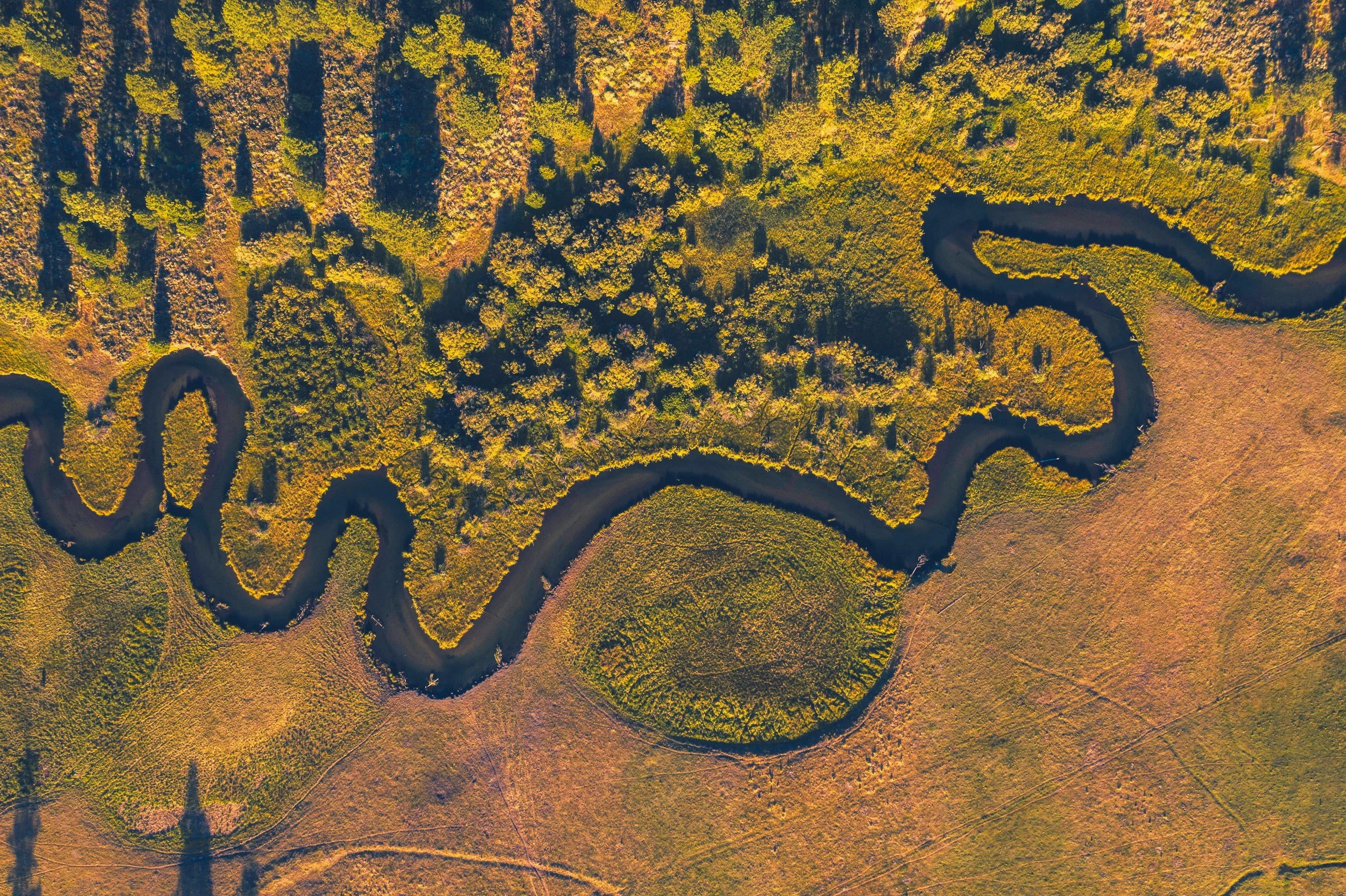
Collaborating with artists, practitioners and researchers within the River Trent landscape.


Permaculture
Exploring how regenerative agricultural practice relates to ecological identity.
Testimonials
Meet Paul
Paul Moseley is an ethnoecologist, environmental practitioner and researcher working at the intersection of systems thinking, complexity theory, environmental anthropology and organisational practice.
With approximately 25 years of experience in countryside management, environmental practice and education, his work has involved navigating complex operational environments, coordinating different forms of expertise and understanding the relationships between people, organisations and the landscapes in which they work.
He is particularly interested in anthro-complexity, the work of Dave Snowden and the Cynefin framework, and how complexity science can inform more adaptive approaches to leadership, strategy and organisational development.
Alongside his professional work, he is the founder of the Centre for Ethnoecology and a Visiting Lecturer at the University of Hertfordshire.
His approach challenges the assumption that complex problems always have straightforward solutions. Instead, he helps organisations develop the understanding, relationships and adaptive capacity needed to navigate uncertainty and create meaningful change.
Blog

Q+A section
Ready to map out a powerful new story for yourself, your team, or organisation?
Request a Discovery Call with Katrice