Further reading
Holling (1973), Resilience and Stability of Ecological Systems
Folke et al. (2010), Resilience Thinking: Integrating Resilience, Adaptability and Transformability
Rockström et al. (2009), A Safe Operating Space for Humanity
Ostrom (2009), A General Framework for Analyzing Sustainability of Social-Ecological Systems
Life and intellectual journey
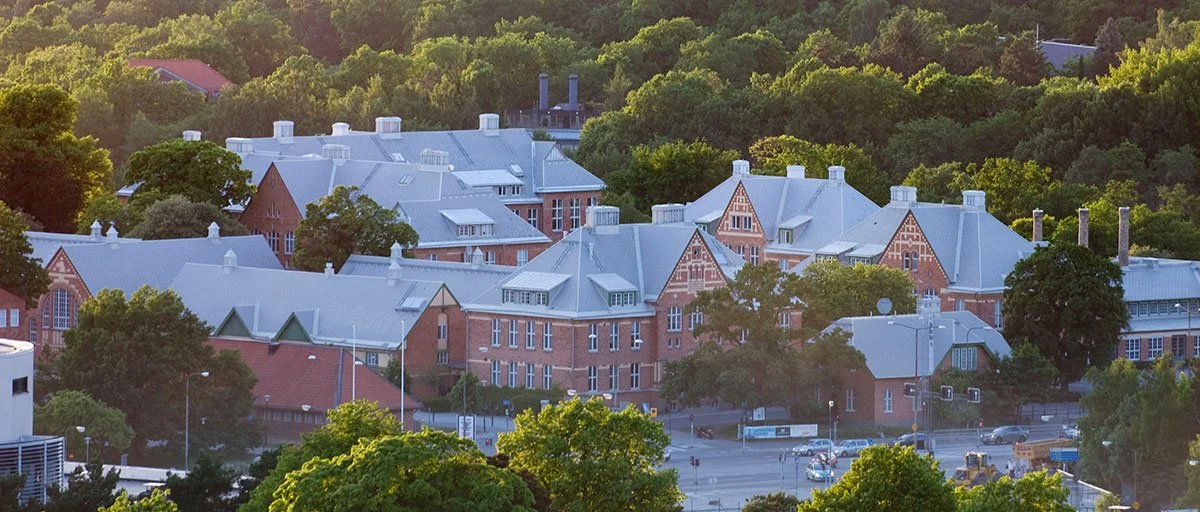
The Stockholm Resilience Centre (SRC) was established in 2007 as an international research centre at Stockholm University, in partnership with the Beijer Institute of Ecological Economics at the Royal Swedish Academy of Sciences. It emerged from growing recognition that environmental change, social development and economic systems cannot be understood independently of one another. The Centre brings together researchers from ecology, environmental science, economics, anthropology, political science and other disciplines to investigate the relationships between people and the biosphere. Its work has developed into one of the most influential international contributions to resilience science, sustainability research and social-ecological systems thinking. Rather than focusing exclusively on environmental pressures, it examines how societies depend upon, influence and adapt to the ecological systems within which they exist.
Key ideas
The Centre's principal contribution has been the development and application of social-ecological systems thinking, particularly the concept of resilience: the capacity of a system to absorb disturbance, reorganise and continue to develop while retaining its essential functions and relationships. Its research has helped establish the importance of understanding ecological thresholds, feedback loops, adaptive capacity, biodiversity and the interactions between human and non-human systems. It has also played a central role in developing the planetary boundaries framework, associated particularly with Johan Rockström and colleagues, which identifies environmental processes that regulate the stability of the Earth system. For ethnoecology, the Centre's work provides a valuable conceptual foundation for investigating how communities understand, respond to and influence environmental change. Its emphasis on adaptive capacity, social learning and interconnected systems is particularly relevant to understanding lived relationships with landscapes and watersheds.
Intellectual influences and legacy
The Stockholm Resilience Centre developed within the traditions of systems ecology, ecological economics, complex adaptive systems and interdisciplinary sustainability research. Its intellectual foundations draw upon earlier work by researchers such as C.S. Holling, whose influential 1973 paper on ecological resilience challenged the assumption that ecosystems necessarily return to a single stable equilibrium following disturbance. The Centre has also been influenced by the work of Elinor Ostrom on collective governance of shared resources and the relationships between institutions, communities and ecosystems. Its research responds to the limitations of approaches that separate environmental management from social, cultural and economic processes. Through researchers including Carl Folke, Johan Rockström and Victor Galaz, it has helped shape international discussions around resilience, planetary boundaries, biodiversity and global sustainability. Its legacy is particularly significant for ethnoecology because it provides ways of understanding communities, knowledge systems and ecological processes as interconnected components of living, evolving systems, rather than as separate subjects of study.